
A hat patch is applied to the outside of a hat, usually on the front or side panel, and serves as the main visual branding element. A hat label or tag is typically found inside the hat and plays a smaller, more functional role, such as displaying a logo detail, sizing information, or a brand touch. The terms get used interchangeably online, but they describe different parts of the hat, different materials, and different customer experiences.
Below is a full breakdown of each term, how each option is actually produced, and how to decide which one fits your project.
What is a hat patch?
A hat patch is a piece of branded material leather, TPU, embroidered thread, or another material applied to the exterior of a hat, most commonly the front panel. It's designed to be the primary visual element people notice first, which is why most businesses, teams, and event organizers lead with a patch rather than a label or tag.
Hat patches typically:
- Sit on the outside of the crown, usually the front or side panel
- Carry a full logo, wordmark, or detailed graphic
- Serve as the main branding choice for businesses, teams, schools, and events
- Range from roughly 2 to 4 inches wide, depending on the hat style and design
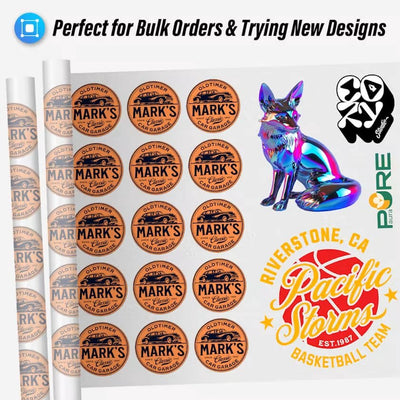
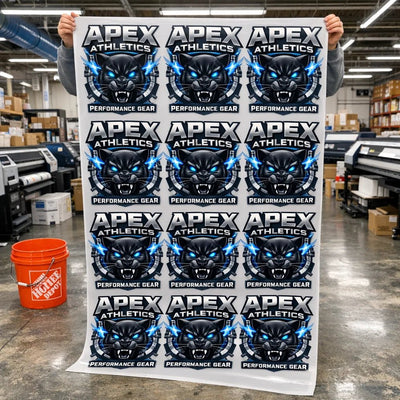
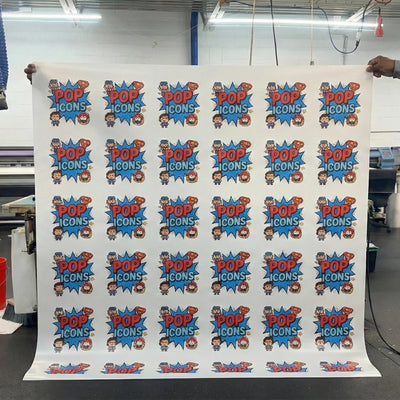
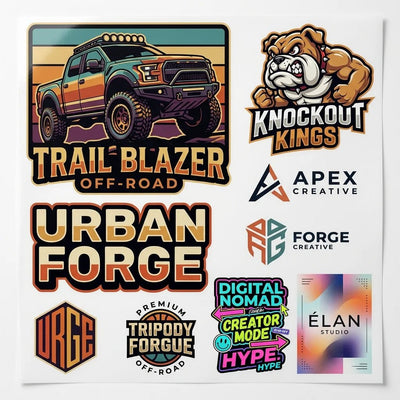
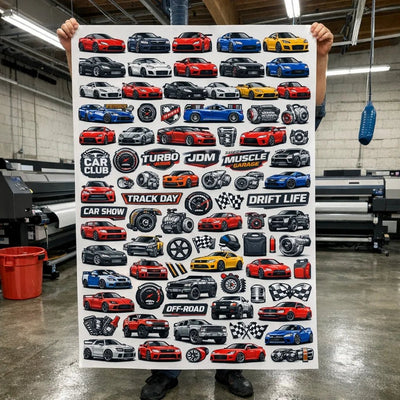
How a UV DTF patch is made: artwork is printed in full color directly onto the patch material (leather-style or TPU) using a UV-cured ink process, then cut to shape. Because it's printed rather than stitched, it can reproduce gradients, fine text, and multi-color logos that would be difficult or impossible to embroider cleanly at small sizes.
DTF Virginia offers two UV DTF patch options: leather patches and TPU patches, both printed with full-color artwork and heat-applied to the finished hat.
What is a hat label?
A hat label is a smaller, flatter branding element that can appear on either the exterior (a small side-panel logo) or interior (along the sweatband) of the hat. Labels are traditionally woven meaning the design is woven directly into fabric using thread, similar to a clothing tag and carry a simplified version of a logo, plus sizing or care details in some cases.
Labels differ from patches in three main ways:
- Size — labels are almost always smaller than patches, since they're a secondary detail rather than the main branding element
- Material — labels are traditionally woven fabric, while patches are more often leather, TPU, or embroidered material
- Placement — labels can go either inside or outside, while patches are almost exclusively exterior
DTF Virginia is developing Smart Woven Labels NFC-enabled woven labels, heat applied rather than sewn, that customers can tap with a smartphone to open a custom link. This turns a traditional static label into an interactive one, without changing how it looks or feels compared to a standard woven label.
What is a hat tag?
A hat tag usually refers to an interior branding element, most often attached near the sweatband. Tags are less about visibility and more about a finishing detail or functional touch the kind of element a customer notices only when they put the hat on or look inside it.
Traditionally, interior hat tags are sewn in during manufacturing. A newer alternative is a pressure-applied tag, which attaches without stitching useful for adding branding to hats after the fact, without needing to sew.
DTF Virginia is developing RudiPress Tags, a pressure-applied interior tag attached without stitching giving a clean, sewn-free finish inside the hat.
Hat patch vs. label vs. tag: quick comparison
| Patch | Label | Tag | |
|---|---|---|---|
| Location | Exterior (front/side) | Interior or exterior | Interior |
| Typical material | Leather-style, TPU, embroidered thread | Woven fabric | Woven fabric or printed material |
| Main purpose | Primary branding | Logo detail, sizing, or interactive link | Finishing detail |
| Visibility | High | Low to medium | Low |
| Typical size | 2–4 inches | Under 1 inch | Under 1 inch |
Which one do you need?
| If you want to... | Choose... |
|---|---|
| Put a bold, visible logo on the front of the hat | A patch (leather or TPU) |
| Add a subtle interior brand detail | A tag |
| Give customers something to tap and interact with | A smart woven label |
| Combine strong exterior branding with an interior detail | A patch plus a tag or label |
For most hat projects, a patch handles the primary branding, while labels and tags add a secondary, more subtle layer once the project's budget or timeline allows for it.
Things to consider before ordering
- Artwork complexity — highly detailed logos with gradients or fine text are usually better suited to a printed patch (leather or TPU) than to embroidery or a small woven label, simply because printing can hold finer detail at small sizes.
- Order volume — there's no minimum order, so patches can be ordered as a single piece or in bulk.
- Turnaround time — UV DTF patches have a 48-hour production turnaround.
- Application method — patches are heat-applied; confirm compatible hat materials before ordering, since not every fabric handles heat application the same way.
In summary
- Patch = exterior, primary branding element
- Label = exterior or interior, secondary logo, sizing, or interactive element
- Tag = interior, finishing detail
If you're planning a custom hat run, browse DTF Virginia's current hat patch options to get started. RudiPress Tags and Smart Woven Labels are in development, with availability updates coming soon.
Hat Patches, Labels & Tags FAQs
Is a hat patch the same as a hat label?
No. A hat patch is the main exterior branding element, typically placed on the front panel for maximum visibility. A hat label is usually smaller and may be placed inside or outside the hat, often displaying a simplified logo, size, or brand information.
Where does a hat tag go?
A hat tag is most commonly attached inside the hat near the sweatband. It typically contains information such as the brand name, size, care instructions, or product details rather than serving as the primary logo.
Can a hat have a patch, a label, and a tag at the same time?
Yes. Many premium hat brands use an exterior patch for the main logo, an interior label for branding or sizing, and a tag for product or care information.
What's the most common hat branding option for a business logo?
An exterior hat patch is the most popular choice because it offers the greatest visibility and can showcase detailed, full-color branding on the front of the hat.
Are woven labels always sewn on?
No. While many woven labels are sewn into garments or hats, some options—such as DTF Virginia's Smart Woven Labels—can be heat applied instead of sewn, providing a clean finish with faster application.