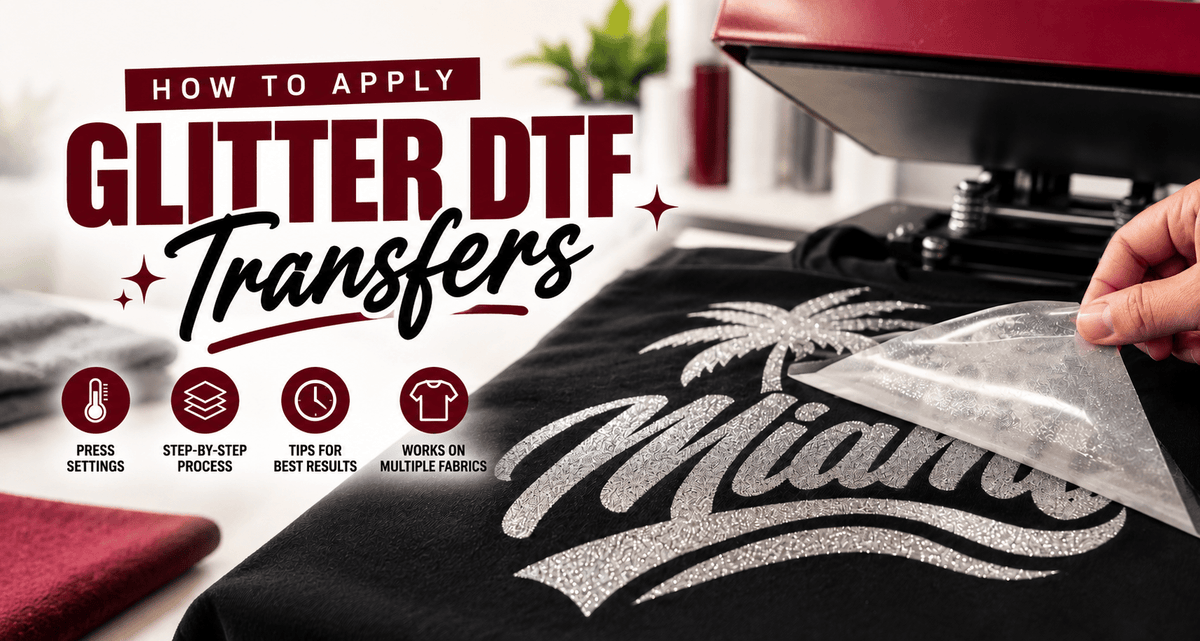
To apply glitter DTF transfers, press at 285°F (about 140°C) for 8 to 10 seconds with medium-to-heavy pressure, then let the film cool completely before peeling. Glitter DTF is a cold peel transfer. Peeling while the film is still warm is the most common reason glitter prints lift or look patchy.
You'll need a heat press, your glitter DTF transfer, a clean garment, and a lint roller. These are the settings we use in production for our glitter DTF transfers.
What are the heat press settings for glitter DTF transfers?
Use 285°F, 8 to 10 seconds, medium-to-heavy pressure, and a cold peel.
Keep these settings in front of you for every press. Glitter DTF is less forgiving than standard DTF when heat or timing drifts.
How do you apply glitter DTF transfers step by step?
Prep the garment, place the transfer, press at 285°F for 8 to 10 seconds, let it cool completely, then peel slowly.
Step 1: Set your press
Set the temperature to 285°F and the timer to 8 to 10 seconds. Let the press fully reach temperature before your first press. If you have a temperature gun, check the platen surface, since press displays can read differently from the actual heat.
Step 2: Prep the garment
Lint roll the print area, then pre-press the garment for a few seconds. This removes moisture and wrinkles that can weaken the bond. Lint and fibers trapped under the transfer show up as small bumps or bare spots in the glitter.
Step 3: Place the transfer
Lay the transfer on the garment with the design facing up and the adhesive side against the fabric. Check that it's straight and centered before closing the press. Once heat touches the adhesive, repositioning isn't an option.
Step 4: Press
Close the press with medium-to-heavy pressure and run the full 8 to 10 seconds. Don't cut the time short, and don't add extra time to "make sure." Both can hurt the result.
Step 5: Let it cool completely
Leave the film in place until it's fully cool. Touch the film with the back of your fingers. If you feel any warmth, wait longer.
Step 6: Peel slowly
Start at a corner and peel low and slow, keeping the film close to the garment rather than pulling straight up. If any part of the design starts lifting with the film, stop and see the troubleshooting section below.
Why does glitter DTF need a cold peel?
The adhesive needs to cool and set before the film is removed. Peeling while it's warm can pull glitter away from the fabric before it has fully bonded, leaving uneven or patchy areas.
If you normally work with hot peel transfers, this is the habit to watch. Most glitter DTF failures come from peeling too early, not from the transfer itself.
How do you know glitter DTF is cool enough to peel?
It's ready when the film feels room temperature to the touch with no warmth at all. Shop temperature affects how long this takes, so go by feel rather than a set countdown.
If you're pressing a batch, move each finished garment off the press to cool and start the next one. This keeps production moving without tempting anyone to peel early.
What does medium-to-heavy pressure feel like?
On a manual press, you should need real effort to lock the handle, but you shouldn't have to force it or lean your body weight on it. If the handle closes with almost no resistance, the pressure is too light.
Pressure changes with garment thickness. A hoodie takes up more space than a lightweight tee, so re-check your pressure setting when you switch garment types.
How do you apply glitter DTF on hoodies, seams and uneven areas?
Raise the print area so it sits flat and level. Seams, zippers, pockets, and hoodie pouches create high spots that stop the platen from pressing evenly across the design.
Place a pressing pillow or pad inside the garment under the print area so the design sits higher than the surrounding seams. Keep zippers and buttons off the platen.
Can you apply glitter DTF transfers to hats?
Yes, with a hat press or a press with a curved hat platen. A flat press can't make full contact with a curved crown, which leads to edges that don't bond. Always do a test press on the same hat style before a full run.
Can you apply glitter DTF with a household iron?
A heat press is strongly recommended. An iron can't hold a consistent temperature or apply even medium-to-heavy pressure across the whole design, so results are unreliable and edges often fail to bond.
How do you fix glitter DTF problems?
Most issues trace back to peel timing, pressure, or garment prep.
How should you wash garments with glitter DTF?
Wait 24 hours after pressing before the first wash, then wash inside out in cold water on a gentle cycle. Tumble dry low or hang dry. Skip bleach and fabric softener, and don't iron directly on the design.
If you're selling finished garments, pass these instructions along to your customers. Most early wash failures come from hot water and high dryer heat.
Where can you order glitter DTF transfers?
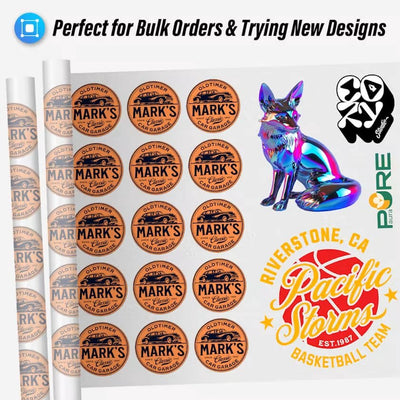
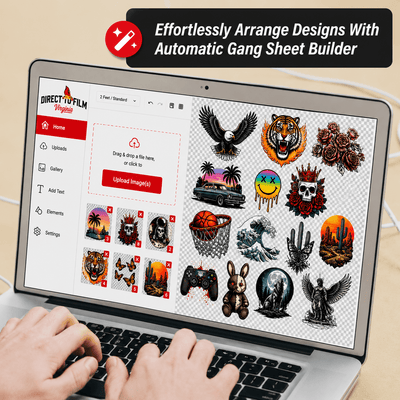
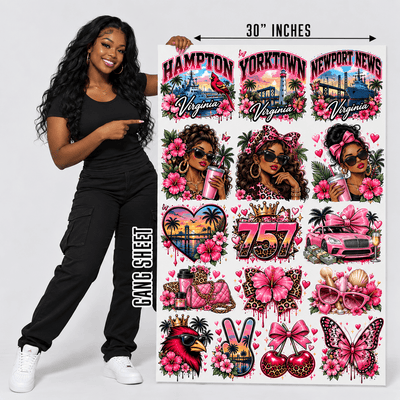
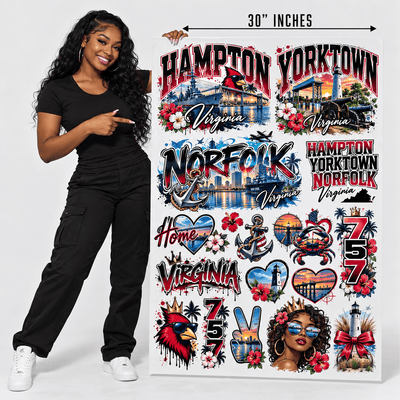
You can upload a finished layout as a glitter DTF gang sheet, or arrange multiple designs on one sheet with the glitter DTF transfers builder. Upload your artwork, place your order online, and choose local pickup in Hampton or Yorktown, Virginia, or select from multiple shipping options at checkout.
Frequently Asked Questions
What temperature do you press glitter DTF transfers at?
Press glitter DTF transfers at 285°F (about 140°C) for 8 to 10 seconds using medium-to-heavy pressure.
Is glitter DTF hot peel or cold peel?
Glitter DTF is a cold-peel transfer. Allow the film to cool completely before removing it from the garment.
How long do you press glitter DTF transfers?
Press glitter DTF transfers for 8 to 10 seconds. Shorter press times may leave the adhesive under-activated, while excessive heat or pressing time can increase the risk of scorching.
Why is my glitter DTF not sticking?
Common causes include peeling the film before it has completely cooled, using insufficient pressure, or having seams that prevent even contact with the heat press. Check each of these factors before your next application.
Why does my glitter DTF look patchy?
Patchy glitter can result from uneven pressure or hot spots on the heat press. Verify the platen temperature and consider using a pressing pillow when working with garments that have seams or uneven surfaces.
Can I apply glitter DTF to polyester?
Yes, but test the transfer on the specific polyester garment before producing a full batch. Polyester can be more susceptible to scorching or shine marks during pressing.
Can I layer glitter DTF over a regular DTF transfer?
Test the combination before using it on a customer order. Layering transfers changes how heat and pressure reach the fabric, so application results can vary depending on the design and garment.
How should I store glitter DTF transfers before pressing?
Store glitter DTF transfers flat in a cool, dry place away from direct sunlight and humidity. Keep them protected until you are ready to press them.