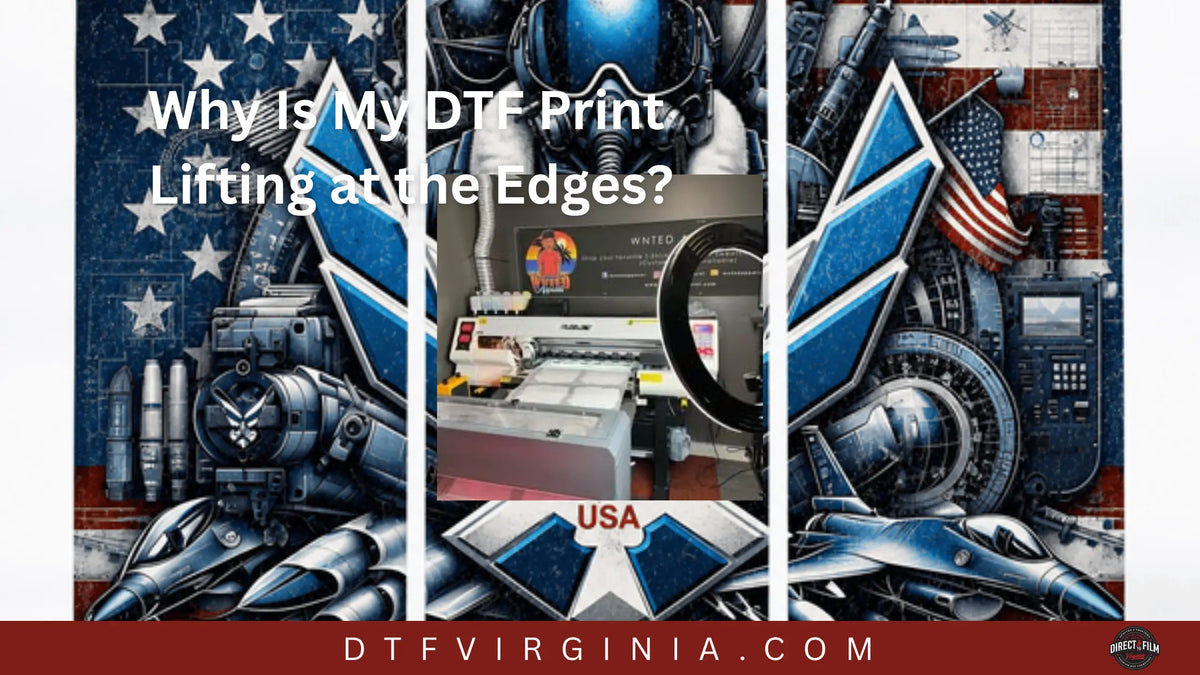
Edge lifting ruins DTF transfers before they reach customers. Peeling edges signal application problems, not product defects. Understanding causes prevents wasted materials and disappointed customers.
Understanding Edge Lifting
Edge lifting occurs when transfer edges separate from fabric after pressing. The center stays bonded while edges gradually peel during wearing or washing. This indicates adhesive didn't bond properly to fabric edges.
Poor bonding happens during initial application, not during care. A properly applied transfer never peels regardless of washing. Edge lifting points to fixable application problems.
Temperature Problems
Heat activates DTF adhesive. Insufficient heat prevents complete adhesive activation. The center heats adequately while edges remain cooler. Edges fail to bond when heat distribution is uneven.
Proper pressing technique requires consistent temperature across the entire transfer. Heat press hot spots create over-heated centers and under-heated edges.
Calibrate your heat press temperature regularly. Use temperature tape to verify actual surface temperature. Many heat presses run hotter or cooler than displayed readings.
Pressure Issues
Insufficient pressure prevents adhesive from bonding completely. Light pressure leaves adhesive partially activated. Edges receive less pressure, causing them to fail first.
Pressure must be even across the entire transfer. Uneven pressure plates apply more force to the center, leaving edges under-pressed.
Check heat press platens for warping. Bent platens create uneven pressure distribution. Replace warped equipment rather than fighting poor pressure.
Peel Timing Mistakes
Peeling film immediately after pressing traps heat in adhesive. The adhesive hasn't fully cooled and solidified. Premature peeling breaks still-warm bonds at edges.
Allow transfers to cool completely before peeling. Wait 10-15 seconds after lifting the heat press. The adhesive needs cooling time to set permanently.
Cold transfers peel cleanly without edge separation. Patient pressing produces better results than rushing.
Adhesive Quality Problems
Low-quality DTF transfers use inferior adhesive. Cheap adhesive doesn't activate fully or bonds weakly. Poor adhesive shows up as edge lifting failures.
Quality suppliers use premium adhesive formulations. They invest in proper curing equipment ensuring complete adhesive activation. Budget transfers cut corners on adhesive quality.
Upgrade to quality suppliers when experiencing consistent edge lifting. Changing suppliers often solves peeling problems immediately.
Fabric Preparation Failures
Dirty, wrinkled fabric prevents proper adhesive bonding. Dust, oils, and lint block adhesive contact. The fabric surface must be clean for adhesive to bond.
Iron garments before pressing transfers. Wrinkles create air gaps under the transfer. Flat fabric ensures full surface contact between transfer and garment.
Avoid fabric softener completely. Softener coating prevents adhesive bonding. Wash garments in plain water before pressing if using softener-treated fabrics.
Different Fabrics Affect Bonding
Cotton requires different pressure than polyester. Polyester accepts adhesive readily while cotton needs more heat. Match pressing parameters to specific fabric type.
Synthetic blends behave differently than natural fabrics. Test application settings on sample garments before full production runs. Each fabric composition has ideal heat and pressure parameters.
Ask suppliers for fabric-specific pressing recommendations. They provide guidance for common materials based on extensive testing.
Humidity and Environmental Factors
High humidity affects adhesive activation. Moisture interferes with the chemical bonding process. Damp conditions create weak adhesive bonds prone to edge lifting.
Press transfers in climate-controlled environments. Maintain relative humidity between 30-50%. Too-dry air also causes problems, so maintain balance.
Allow pressed garments to cool at a consistent temperature. Temperature fluctuations affect adhesive solidification. Cool transfers gradually rather than exposing to cold air immediately.
Application Technique Errors
Incorrect peel angle causes edge lifting. Pulling film at shallow angles stresses edges. Peel straight up using consistent, even pressure.
Jerky, uneven peeling pulls edges more than center. Smooth, steady peeling ensures even adhesive release from film. Practice smooth peeling technique on samples.
Don't re-press lifted edges. Additional heat and pressure won't fix poor initial bonding. Complete re-application is necessary if edges lift significantly.
Testing Your Setup
Press test transfers on scrap fabric before production runs. Check edge bonding immediately after cooling. Small test runs identify problems before affecting inventory.
Wash test garments to verify durability. Some prints pass initial inspection but peel during first wash. Testing accelerates failure mode identification.
Document successful pressing parameters for future reference. Record temperature, pressure, dwell time, and peel timing. Consistency prevents random failures.
Prevention Strategies
Establish standardized pressing protocols. Train staff on proper technique. Consistency prevents most edge lifting problems.
Maintain equipment regularly. Clean heat press platens between runs. Replace worn platens affecting pressure distribution.
Invest in quality transfers from reputable suppliers. Premium adhesive and proper manufacturing prevent edge lifting.
When to Blame the Transfer
Some edge lifting indicates transfer defects, not application problems. If 100% of transfers fail despite proper pressing, the transfer quality is questionable.
Reputable suppliers guarantee quality. Request sample testing or warranty replacement for defective transfers. Don't accept consistent failure as normal.
Poor adhesive, improper curing, or manufacturing defects cause transfer problems. Reliable suppliers stand behind products with guarantees.
Care and Washing Considerations
Proper washing technique prevents edge stress. Turn garments inside out and wash in cold water. Avoid bleach and fabric softener completely.
Tumble dry on low heat. High heat stresses edges and accelerates peeling. Air drying prevents all heat-related edge stress.
Customers deserve care instructions preventing edge lifting. Educate customers about proper washing extending print life.
Quick Troubleshooting Checklist
Use this checklist to systematically troubleshoot edge lifting:
-
Check heat press temperature with calibration tape
-
Verify even pressure distribution across platens
-
Allow complete cooling before peeling
-
Test on scrap fabric before production
-
Inspect fabric for cleanliness and wrinkles
-
Verify humidity levels 30-50%
-
Practice smooth, consistent peel technique
-
Request test transfers from supplier if problems persist
Final Words
Edge lifting indicates application problems, not product failure. Temperature, pressure, timing, and technique cause most peeling. Proper pressing prevents edge lifting entirely. Test thoroughly and maintain consistent technique for reliable results.