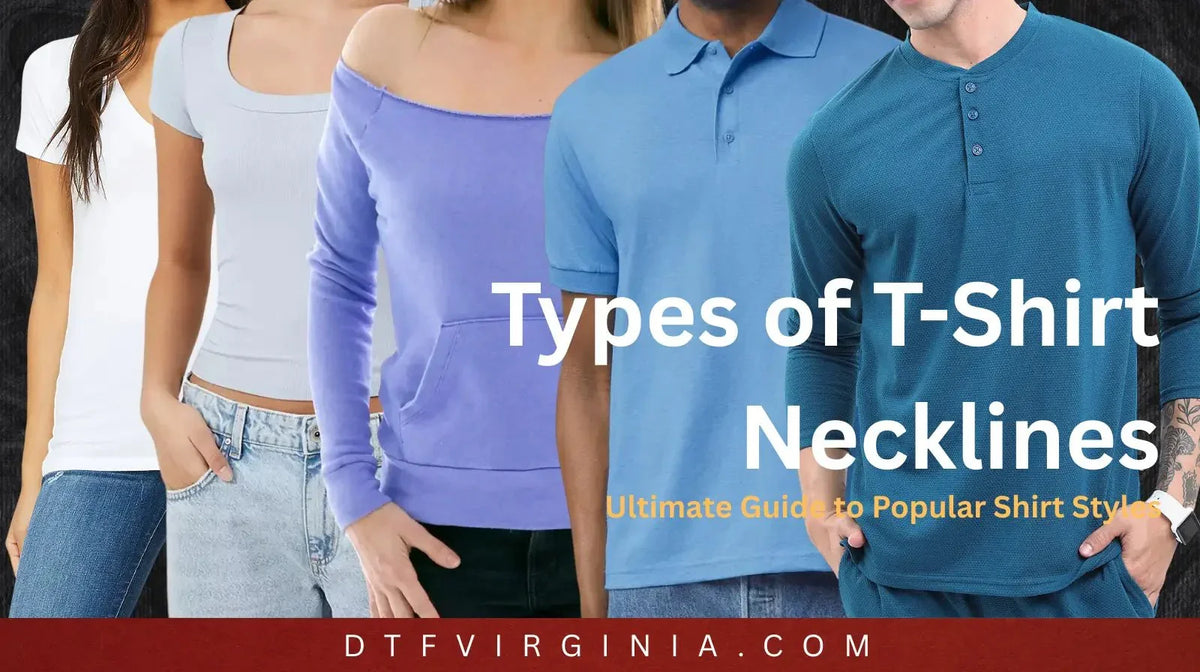
When you think of a t-shirt, the first thing you notice is often the neckline. It might seem like a small detail, but it can completely change how a shirt looks, fits, and feels.
The neckline affects everything from comfort to style, and even how a design sits on the fabric if you plan to print on it. The shirt material also plays a big part, whether it’s soft cotton, breathable polyester, or blended fibers, each reacts differently to printing and wear, as covered in our breakdown of types of t-shirt material.
In this guide, you’ll learn about the most common types of t-shirt necklines, what makes each one special, and how they fit into different styles. Whether you’re in fashion, custom printing, or just curious about t-shirt design, this article will help you understand necklines in a clear and simple way.
Table of Contents
-
Introduction
-
T-Shirt Neckline Types
-
Crew Neckline (Round Neck)
-
V-Neckline
-
Scoop Neckline
-
Henley Neckline
-
Polo Collar (Tennis or Golf Collar)
-
Ringer Tee Neckline
-
Off-Shoulder Neckline (Bardot)
-
Zippered or Quarter-Zip Neckline
-
Deep V-Neckline
-
-
Collars and T-Shirt Construction
-
How to Choose the Right Neckline
-
FAQs About Necklines
-
Conclusion
Types of T-shirt Necklines
While the classic crew neck remains the most recognizable t-shirt style, the world of shirt necklines extends far beyond that. Each neckline affects how a shirt drapes, how it frames the face, and even how easy it is to print on.
From casual V-necks to statement-making off-shoulder cuts, understanding neckline types helps designers, decorators, and apparel enthusiasts choose the right garment for their purpose whether that’s fashion, comfort, or print precision.
Let’s explore the most popular t-shirt neckline types, how they’re constructed, and what makes them unique. If you love perfect-fitting apparel, don’t miss our guide on how to measure your hat size to complete your look from head to toe.
Crew Neckline (Round Neck)
Best for: Everyday wear, unisex tees, large front prints
The crew neckline is a timeless staple. It features a close-fitting circular collar that rests neatly at the base of the neck. Originally used in athletic and military apparel, the crew neck is now the go-to option for casual, comfortable shirts. Most crew necks are made from cotton or cotton blends, though polyester vs cotton fabrics each bring their own benefits when it comes to softness, breathability, and print quality.

Style & Fit:
Crew necks create a balanced, clean silhouette that works on all body types. The high neckline draws attention to the shoulders and face, making it ideal for minimalist or logo-centric designs.
Fabric & Printing Considerations:
For DTF or screen printing, crew neck t-shirts offer the largest and most stable print area. The flat surface below the collar ensures accurate alignment and even heat press pressure.
V-Neckline
Best for: Slimming effect, layering, fashion-forward looks
The V-neck gets its name from the pointed V shape at the front, which elongates the neck and creates a flattering frame for the face and collarbone.

Style & Fit:
This neckline is popular among those who prefer a slightly more tailored, modern look. The downward point visually lengthens the torso, making it great for both men’s and women’s cuts.
Fabric & Printing Considerations:
V-necks reduce the central print area, so small chest logos, minimalist text, or off-center graphics work best. For activewear or performance tees, many brands use moisture-wicking material to keep the fabric light, cool, and comfortable during movement.
Scoop Neckline
Best for: Feminine styles, relaxed fits, warm weather
The scoop neckline curves lower and wider than a crew neck, creating an open frame that highlights the collarbones. It’s a common feature in women’s t-shirts and long-sleeve tops.

Style & Fit:
Scoop necks have a softer, more elegant look. The open neckline draws attention upward, complementing layered necklaces or casual summer outfits.
Fabric & Printing Considerations:
Due to the deeper curve, the available print area is smaller. For DTF printing, place designs slightly lower on the chest to maintain visibility and avoid seam interference.
Henley Neckline
Best for: Casual wear with a polished touch
The Henley neckline is a blend of simplicity and refinement. It features a round neck with a short button placket, usually 2–5 buttons long. This neckline bridges the gap between casual and semi-formal, making it a favorite in both men’s and women’s apparel.

Style & Fit:
Henleys offer versatility, button it up for a structured look, or leave it open for laid-back comfort.
Fabric & Printing Considerations:
Because of the button placket, designs should be placed below or beside the buttons for a balanced composition. Left-chest prints or small graphics work especially well.
Polo Collar (Tennis or Golf Collar)
Best for: Professional, sporty, or business-casual looks
The polo collar combines the ease of a t-shirt with the sophistication of a collared shirt. It features a short, stand-up collar with a button placket extending a few inches down the chest.

Style & Fit:
Polos are known for their structured, athletic aesthetic. They’re ideal for uniforms, golf shirts, or casual business attire.
Fabric & Printing Considerations:
When printing on polos, keep designs below the placket to prevent distortion. Embroidery-style or left-chest prints complement the collar shape best.
Ringer Tee Neckline
Best for: Retro styles, youth and streetwear fashion
The ringer tee is a throwback to the 1970s defined by its contrasting ribbed neckline and sleeve cuffs. The body and collar are typically different colors, giving the shirt a bold, graphic appearance.

Style & Fit:
Ringer tees bring a vintage vibe to casual outfits. The thicker collar emphasizes the neckline and shoulders, making them eye-catching for bold color contrasts.
Fabric & Printing Considerations:
Since the collar color contrasts with the body, choose print colors that complement both tones. Avoid designs that clash with the neck trim for a cohesive look.
Off-Shoulder Neckline (Bardot)
Best for: Women’s fashion, evening or summer wear
The off-shoulder neckline sits below the shoulders, exposing the collarbones and upper chest. It’s feminine, romantic, and perfect for warmer weather or event wear.

Style & Fit:
This neckline emphasizes the shoulders and upper torso, creating a flattering hourglass effect.
Fabric & Printing Considerations:
Because it sits lower, the printable area is minimal. Stick to small designs near the center chest or lower torso to maintain balance.
Zippered or Quarter-Zip Neckline
Best for: Athleisure, activewear, functional apparel
A zippered neckline (also called a quarter-zip) includes a short zipper extending down from the collar, often combined with a mock neck. It’s commonly found in athletic and outdoor apparel.

Style & Fit:
The zipper adds functionality and style, offering adjustable ventilation and a sleek, modern aesthetic.
Fabric & Printing Considerations:
Avoid placing prints directly over the zipper. Instead, use left-chest logos, sleeve prints, or back designs to preserve the shirt’s symmetry and comfort.
Deep V-Neckline
Best for: Fashion-forward or layered outfits
A deeper version of the V-neck, this neckline extends farther down the chest for a dramatic, bold look.
Style & Fit:
Popular in fitted or fashion-forward apparel, the deep V elongates the torso and works well for layering.
Fabric & Printing Considerations:
Printing space is limited, small chest logos or lower-chest designs are recommended. Avoid dense graphics that could distort along the neckline’s point.
Collars and T-Shirt Construction
When we talk about t-shirt necklines, the collar construction plays a big role in how the shirt feels and lasts. It’s not just about looks, the collar type affects comfort, shape, and how well the neckline holds up after washing.

Here’s a simple look at the most common collar constructions and what makes them different.
Ribbed Collars
Ribbed collars are made from a stretchy, textured fabric that helps the neckline stay snug without feeling tight. You’ll find them on most casual t-shirts, especially crew necks and ringer tees.
Why it works:
The ribbed material gives the neckline flexibility, so it moves with the wearer and bounces back into shape after washing. This makes ribbed collars perfect for everyday shirts that need to hold up over time.
Printing tip:
Because ribbed collars stretch, make sure the area just below the collar is smooth before applying transfers or prints. This keeps your design straight and even.
Self-Fabric Collars
A self-fabric collar is made from the same material as the rest of the shirt. This gives a cleaner, more modern look, often seen in fashion or premium t-shirts.
Why it works:
These collars sit flatter and softer against the neck. They’re great for lightweight shirts and can make the overall design feel more refined.
Printing tip:
Since the collar is less raised, you can print closer to the neckline without worrying about uneven pressure. This helps when placing chest prints or small graphics.
Collar Width and Stitching
Collars come in different widths, some are thin and subtle, while others are thicker for a sporty look. The stitching also affects the overall strength. A double-stitched collar lasts longer and resists stretching, while a single-stitched collar looks lighter but can wear out faster.
Choosing the right one:
-
Thin collars give a neat, fitted appearance — good for modern or minimalist shirts.
-
Thicker collars feel more casual and durable — good for classic tees or athletic wear.
Printing tip:
If the shirt has a wide collar or heavy stitching, place the print slightly lower on the chest to make sure the design sits flat.
Fabric Quality and Durability
The quality of the fabric around the collar makes a big difference. Premium t-shirts often use soft cotton blends or pre-shrunk materials that keep their shape, while cheaper shirts can lose elasticity and stretch out after a few washes. Some shirts feature heather fabric, a mix of fibers that adds texture, depth, and softness without sacrificing durability.
What to look for:
-
Collars that return to their shape after pulling.
-
Smooth stitching with no loose threads.
-
Even thickness between the neckline and the body fabric.
Printing tip:
A well-made collar helps keep the print aligned over time. Poor-quality collars can twist or sag, which can make printed designs look uneven after washing.
Common Collar Issues to Avoid
Even a great t-shirt can lose appeal if the collar stretches, rolls, or fades. Here are a few common issues and how to prevent them:
-
Stretching: Avoid hanging shirts by the neckline, it causes the collar to lose shape.
-
Rolling edges: This happens when the collar isn’t reinforced or the fabric is too thin. Choose shirts with double stitching.
-
Color fading: Dark collars can fade faster. Wash in cold water and avoid bleach.
Taking care of collar details helps the shirt stay fresh and wearable longer.
How to Choose the Right Neckline
With so many neckline options available, it can be hard to know which one fits best. The right neckline depends on the shirt’s purpose, who’s wearing it, and even how the design will be printed. A well-chosen neckline not only looks good but also feels comfortable and shows off your design in the best way.
Here are a few simple things to keep in mind when choosing the right neckline.
1. Think About Comfort
Comfort should always come first. A neckline that’s too tight can feel restrictive, while one that’s too loose may lose shape.
-
Crew necks offer a snug and cozy fit that works for most people.
-
V-necks give more breathing room and a slightly dressier look.
-
Scoop and boat necks feel light and airy — perfect for warm weather.
-
Turtlenecks are better for cooler months when you want extra coverage.
Try on different styles if possible. The neckline should sit comfortably without pulling or stretching.
2. Match the Neckline to the Body Type
Certain neckline shapes flatter specific body types. While there’s no strict rule, these general tips can help guide your choice:
| Body Type | Necklines That Flatter | Necklines to Limit |
|---|---|---|
| Short neck | V-neck, scoop neck | Crew neck, turtleneck |
| Broad shoulders | Scoop, deep V | Boat neck, square |
| Long neck | Crew neck, mock neck | Deep V, low scoop |
| Petite frame | Scoop, boat | High collar styles |
| Plus size | V-neck, cowl |
Use this as a starting point, but comfort and personal style should always lead the decision.
3. Consider the Style or Occasion
Necklines can completely change how a shirt looks in different settings.
-
Casual wear: Crew, scoop, and ringer necklines are great for relaxed looks.
-
Work or uniforms: Polo collars and Henleys give a neat, professional appearance.
-
Trendy or fashion-forward: Off-shoulder, square, or deep V styles stand out more.
-
Athletic or activewear: Zippered and mock necklines provide structure and flexibility.
Choose a neckline that fits the tone of the outfit or the message you want your design to give.
4. Plan for Printing or Decoration
If you’re adding a design or logo, the neckline can affect how and where it’s placed.
Here are a few simple tips for print-friendly necklines:
-
Crew necks have the most space for large front prints.
-
V-necks and scoop necks look better with smaller, centered designs.
-
Polos work well with left-chest logos or name prints.
-
Henleys and zippered shirts should have prints below or beside the placket.
-
Off-shoulder and wide necklines need minimal, lower designs for balance.
Always make sure the print sits flat on the fabric and isn’t too close to seams or edges.
5. Factor in Durability and Care
Some neckline styles require more maintenance than others. Ribbed collars hold their shape better over time, while wide or loose necklines may stretch out faster if not washed carefully. If you’re making shirts for everyday wear, choose durable fabrics and reinforced stitching.
6. Personal Preference Always Wins
At the end of the day, the best neckline is the one that feels right. Trends change, but comfort and confidence never go out of style. Whether you prefer the structure of a crew neck or the openness of a V-neck, choose what fits your personality and lifestyle.
Conclusion
Knowing the different neckline types helps you choose the right shirt for your design, occasion, or brand. Crew necks are timeless and comfortable, V-necks create a sharper and slimmer shape, and polos or Henleys add structure for a more polished look. Even simple changes, like collar width or stitching, can completely transform the final impression of a shirt.
If you create custom designs or work in apparel printing, understanding necklines also helps you plan better print placement. The neckline affects where your design sits, how much space you have, and how the finished print looks when worn. Taking the time to choose the right cut ensures your shirts feel as good as they look.
At DTF Virginia, we believe that great designs start with the right foundation, and that includes understanding every detail of the garment you’re working with. Whether it’s a crew neck tee or a collared polo, we’re proud to help creators, small businesses, and apparel brands bring their designs to life with quality DTF transfers and dependable service.